Choosing a female hair-loss clinic in Borivali requires more than comparing a consultation fee or a transplant package. You need to identify the cause of shedding, check who will provide the treatment, and obtain a written estimate covering tests, medicines, sessions, surgery, and follow-up.
Key takeaways
- Persistent shedding needs a cause-based medical assessment.
- Compare clinics by diagnosis, treatment plan, follow-up and total cost.
- Check treatment suitability before choosing medicines, procedures or supplements.
- A transplant suits selected stable pattern-loss cases, not active shedding causes.
Which causes of female hair loss need medical attention?
Sudden or persistent shedding deserves a cause-based assessment, not just a cosmetic product. Female hair loss causes include hormonal pattern loss, illness, nutritional deficiency, medication effects and scalp inflammation; the correct treatment depends on identifying which one is present.
| Cause | Typical clue | Seek medical evaluation when |
|---|---|---|
| Female-pattern hair loss | Widening part or thinner crown with gradual progression | Loss continues, becomes visible, or affects the hairline |
| Telogen effluvium | Diffuse shedding two to three months after fever, surgery, severe stress, weight loss or childbirth | Shedding lasts beyond three to six months, recurs, or causes marked thinning |
| Traction alopecia | Broken hairs or thinning along tight braids, extensions, buns or ponytails | Tenderness, crusting, a receding edge or smooth permanent-looking patches appear |
| Alopecia areata | Sudden, smooth round patches; eyebrow or eyelash loss | Any patch develops quickly or expands |
| Scarring or inflamed scalp disease | Pain, burning, scale, pustules or shiny skin with absent follicle openings | Arrange prompt review because permanent loss can occur |
Female-pattern hair loss is a diagnosis of pattern and exclusion. A clinician may examine the scalp and request ferritin, a complete blood count, thyroid-stimulating hormone, vitamin B12, vitamin D or androgen tests when symptoms suggest deficiency, thyroid disease or androgen excess.
If you searched “traction alopecia Borivali,” avoid delaying care while trying oils or camouflage. Rapid shedding, bald patches, scalp pain, heavy scaling, or loss of eyebrows requires medical assessment; pregnancy and breastfeeding also require advice before starting hair-loss medicines.
What should happen during a female hair-loss diagnosis?
A useful female hair-loss diagnosis starts with history, not a package recommendation. The clinician should ask when shedding began, whether it is sudden or gradual, family pattern, recent illness or fever, weight change, diet, medicines, tight hairstyles, itching, pain, scaling, and scarring.
Menstrual history matters: irregular periods, heavy bleeding, acne, or excess facial hair can point toward iron loss or androgen excess. State whether you are pregnant, planning pregnancy, or breastfeeding before discussing medicines; finasteride and other anti-androgens require specific safety review.
The consultation should include:
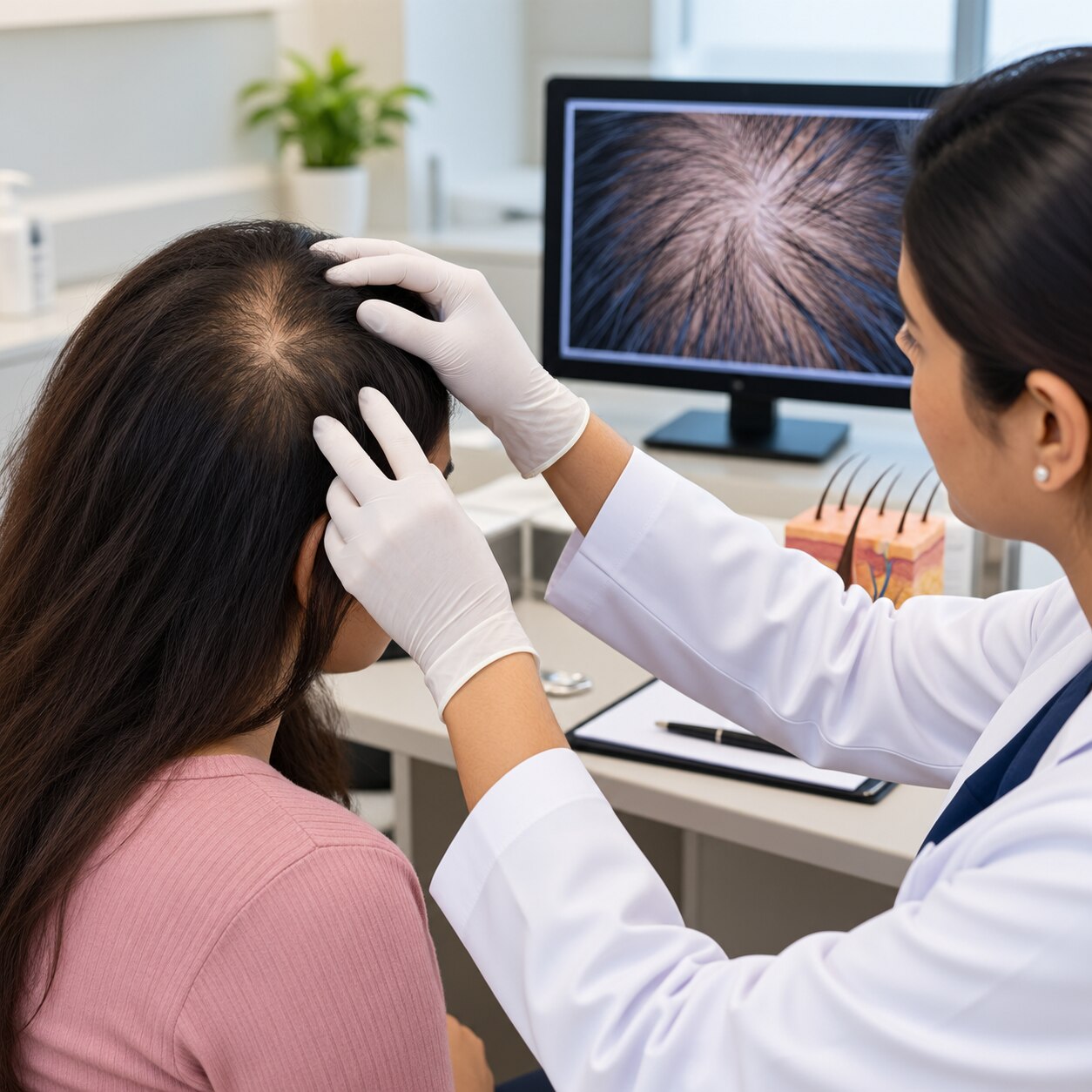
- Scalp examination for widening of the part, miniaturised hairs, broken hairs, redness, scale, pustules, loss of follicle openings, and smooth bald patches.
- A hair-pull test, performed by gently tugging a group of hairs, to assess active shedding. A positive result supports shedding but does not identify its cause.
- Trichoscopy, using magnification to compare hair-shaft thickness, follicle openings, yellow dots, broken hairs, and scalp inflammation.
- Blood tests only when the history or examination justifies them. A complete blood count and a ferritin test for hair loss fit heavy menstrual bleeding, fatigue, restrictive eating, or suspected iron deficiency; thyroid-stimulating hormone, vitamin B12, vitamin D, or androgen tests require their own clinical clues.
Female hair-loss diagnosis is a pattern-and-exclusion process. Rapid progression, scarring, inflammation, or suspected alopecia areata may require a dermatologist’s review or scalp biopsy. Confirm the cause and stability before considering transplantation, because active inflammatory disease, untreated scarring alopecia, or rapidly progressive shedding can postpone surgery.
How do you compare female hair-loss clinics in Borivali?
A clinic that offers hair transplantation is not automatically a specialist female hair-loss clinic Borivali patients can rely on. Compare the treating doctor, diagnosis process and aftercare—not the brand name or package price. Use the same questions at Dr. Karan Mehta's Mouth Jaw Face & Hair Transplant that you would ask at any other clinic.
- Verify the doctor’s hair-transplant surgeon qualifications: documented training in hair restoration, diagnosis of alopecia, donor-area assessment and management of female-pattern hair loss. Ask which doctor will examine you and perform each surgical step.
- Ask how many women with diffuse thinning, scarring alopecia, alopecia areata or rapidly progressive shedding the surgeon has assessed. Surgery without identifying the cause can waste donor follicles and worsen cosmetic expectations.
- Inspect clinic facility standards: a dedicated procedure room, sterile single-use items where appropriate, instrument sterilisation records, emergency medicines and a documented infection-control process.
- Get delegation in writing. Confirm whether extraction, graft handling, recipient-site creation and implantation are performed by the named surgeon, another doctor or technicians.
- Request a written hair-loss follow-up plan covering wound review, progress checks, ongoing medical treatment and who answers urgent calls after the procedure.
| Check | Strong evidence | Warning sign |
|---|---|---|
| Doctor | Named surgeon meets you and explains the diagnosis | Sales consultant leads the consultation |
| Facility | Procedure room and emergency protocol are shown | Treatment occurs in an unspecified room |
| Aftercare | Written review dates and emergency contact | “Follow-up” means only a messaging number |
Related service
Hair Hair loss is a normal physiologic process. The normal count for hair loss is somewhere between 50-100 hairs daily, females lose more than males. View service → |
Which female hair-loss treatments are worth comparing, and who should avoid them?
Start with the cause, not the most expensive option. Topical minoxidil for women suits female-pattern hair loss, while camouflage products only hide visible thinning and do not treat shedding.
| Option | Problem addressed | Maintenance and limitations | Pregnancy or breastfeeding safety |
|---|---|---|---|
| Topical minoxidil | Female-pattern hair loss | 5% foam once daily or 2% solution twice daily; benefit takes several months and stops after discontinuation | Do not start during pregnancy or breastfeeding without medical advice |
| Oral hair-loss treatment | Pattern loss, hormonal influence, or selected resistant cases | Spironolactone, finasteride, or oral minoxidil require prescription, monitoring, and ongoing use; side effects limit suitability | Avoid finasteride and other anti-androgens during pregnancy; review every oral medicine before conception or breastfeeding |
| PRP for female hair loss | Selected pattern loss when injections are acceptable | Usually needs repeated sessions and maintenance; results vary and it does not correct scarring or active inflammation | Postpone during pregnancy and breastfeeding unless your doctor specifically approves it |
| Low-level light therapy women | Mild pattern thinning as an add-on | Requires regular device use for months; response is modest and devices do not treat the cause | Obtain medical advice before use during pregnancy or breastfeeding |
| Camouflage products | Immediate coverage of widened part lines or scalp show-through | Fibres, powders, and sprays wash out and can irritate diseased scalps | Usually the lowest-risk option, but avoid irritated or broken skin |
| Transplantation | Stable loss with a suitable donor area | Permanent grafts do not stop ongoing thinning; surgery requires careful diagnosis and follow-up | Avoid during pregnancy or breastfeeding; postpone rapidly progressive loss, alopecia areata, scarring alopecia, or uncontrolled scalp inflammation |
Have a clinician assess donor density and disease activity before surgery. Pregnancy, planned conception, and breastfeeding require a treatment review rather than self-starting medicines.
What does female hair-loss treatment cost in Borivali, and when is a transplant suitable?
A realistic female hair-loss treatment cost Borivali estimate must include recurring care, not just the first appointment. Private Mumbai prices vary, so request an itemised quotation before committing.
- Consultation: ask whether the fee includes scalp examination, trichoscopy, and follow-up.
- Tests: ferritin, complete blood count, thyroid-stimulating hormone, vitamin B12, vitamin D, or androgen tests are billed separately when indicated.
- Medicines: topical minoxidil often costs a few hundred to about ₹2,000 monthly, depending on formulation and brand.
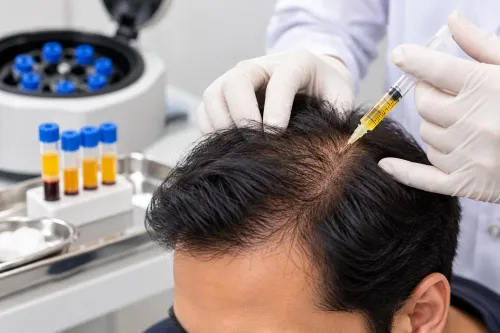
- PRP: compare the per-session PRP cost Mumbai clinics quote, the number of sessions, package expiry, and maintenance sessions.
- Packages: confirm inclusions, GST or other taxes, medicines, review visits, and cancellation terms.
- Transplantation: advertised hair-transplant cost Borivali figures commonly fall around ₹40,000–₹1,50,000 for smaller or moderate sessions; larger sessions or premium per-graft pricing can exceed ₹2,00,000.
A transplant redistributes existing follicles and does not stop pattern loss, so maintenance treatment can remain an ongoing expense. The quotation must state the estimated graft count, technique, donor and recipient areas, physician fees, medicines, follow-up, and who extracts and implants the grafts. “Unlimited grafts” is not a useful comparison.
Female hair-transplant candidacy depends on diagnosis and stability, not hair loss alone. Postpone or avoid surgery with:
- Rapidly progressive shedding
- Active alopecia areata
- Untreated scarring or inflammatory scalp disease
- Diffuse thinning affecting the donor area
Assess donor density for diffuse unpatterned alopecia before surgery; vulnerable donor follicles can produce a poor result. A stable diagnosis and realistic graft estimate come first.
Frequently asked questions
Which causes of female hair loss need medical attention?
Seek medical attention for sudden shedding, rapidly widening part lines, bald patches, scalp pain or inflammation, eyebrow loss, or hair loss with fatigue, weight change or irregular periods. Causes include hormonal pattern loss, thyroid disease, iron deficiency, illness, medication effects and scalp disorders.
What should happen during a female hair-loss diagnosis?
A diagnosis should cover your medical history, menstrual and pregnancy history, medicines, diet, stress, family history and the pattern of shedding. The clinician should examine the scalp and hair shafts, use dermoscopy when needed, and order targeted tests such as a complete blood count, ferritin, thyroid-stimulating hormone or hormone tests when symptoms justify them.
How do you compare female hair-loss clinics in Borivali?
Compare the clinician’s qualifications, examination process, named diagnosis, written treatment plan, expected timeline, follow-up schedule and complete price. Ask who performs each procedure, what happens if shedding continues, and whether medicines or tests are included.
Which female hair-loss treatments are worth comparing, and who should avoid them?
Compare treatment options by cause, evidence, side effects, time commitment and maintenance. Minoxidil, prescription medicines, correction of deficiencies, scalp treatment, platelet-rich plasma and transplantation suit different patients. Avoid self-starting prescription medicines during pregnancy or breastfeeding, and do not use supplements without confirmed deficiency.
What does female hair-loss treatment cost in Borivali, and when is a transplant suitable?
Borivali costs vary with consultation, tests, medicines, procedure type, graft number and follow-up, so request an itemised written estimate. A transplant is considered after the cause is diagnosed and hair loss is stable, donor hair is adequate, and expectations match the likely coverage; it is not a cure for active diffuse shedding.