A dimple looks convincing when it follows your facial proportions, moves with your smile and softens when your face is relaxed. You will be able to compare surgical and temporary options, understand how placement and tethering affect the result, and prepare useful questions for a Mumbai consultation.
Key takeaways
- Choose a dimple that follows your smile and softens when your face relaxes.
- Compare surgery, needle techniques, makeup and injectables by permanence and risks.
- Expect swelling and dimple changes while the cheek heals after surgery.
- Ask about technique, scar placement, revisions, complications and aftercare before booking.
Which dimple types look most natural on different faces?
The most natural dimple type is the one that follows your own cheek movement, proportions and smile pattern—not a fixed measurement copied from a photograph. A cheek dimple usually sits in the fuller cheek area and becomes clearer when you smile or move your cheek; it should soften when your face is relaxed.
A smile-corner dimple sits nearer the mouth and creates a different expression.
| Dimple type | Typical design | Natural-result check |
|---|---|---|
| Cheek dimple | Rounded or soft indentation in the cheek | More visible during smiling than at rest |
| Smile-corner dimple | Smaller mark near the mouth corner | Does not pull the mouth downward or look misplaced |
| Unilateral dimple | One side only | Matches facial asymmetry or an existing natural dimple |
| Bilateral dimples | One on each cheek | Each side is adjusted to the face, not forced into identical positions |
During consultation, the surgeon should assess you at rest, while smiling and while speaking. The design needs to account for cheek fullness, mouth-corner position, facial asymmetry, existing dimples and overall facial proportions. A deep, sharply outlined pit that stays prominent at rest can look overcorrected.
Before treatment, agree on the intended size, depth, rounded or soft shape and smile-only movement. These details matter when comparing natural dimple creation options in Mumbai. The main dimple creation types differ in access and control, but no technique makes an unsuitable position look natural.
How do surgery, needle techniques, makeup and injectables compare?
For a lasting dimple that changes with smiling, surgery offers the closest match to a natural skin-to-muscle tether. Makeup suits a trial or one event; injectables create volume changes rather than the same movement-related pull.
| Option | Access or method | Duration, visibility and trade-off |
|---|---|---|
| Intraoral suture dimpleplasty | Small buccal-mucosa incision; suture anchors cheek skin to deeper tissue | No facial incision; designed for longer-term movement-related indentation; carries infection, asymmetry and recurrence risks |
| Percutaneous needle or suture technique | Needle or instrument passes through skin and cheek tissues | Less dissection; puncture marks, excessive depth, asymmetry and loss of indentation remain possible |
| Open approach | Small external skin incision gives direct access to the tether | Direct control of placement and tension; trades that control for a facial scar |
| Makeup | Temporary shading or contouring | Useful for testing position or photographs; cannot indent the cheek during movement |
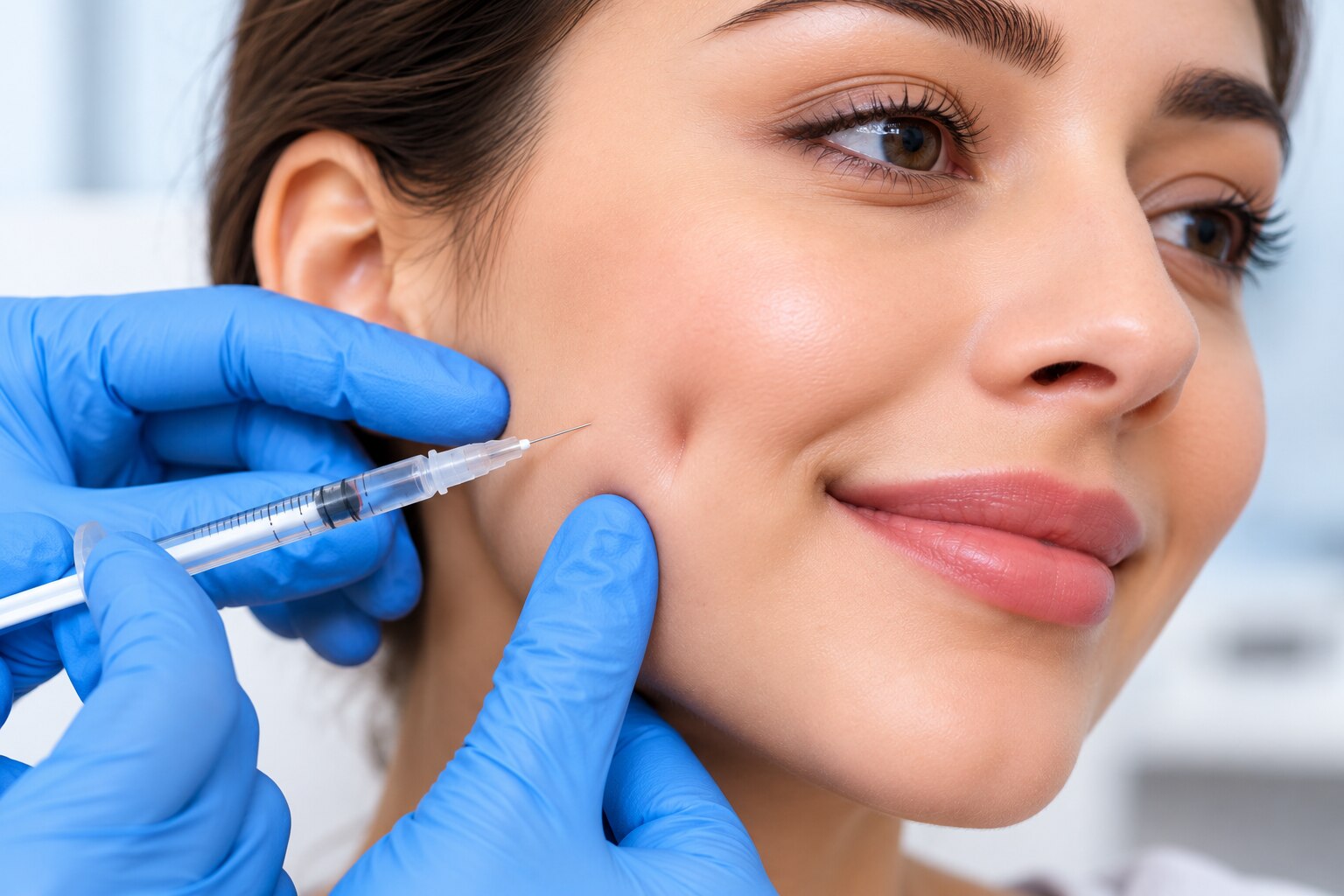
| Injectables | Product placed at a selected depth | Temporary or variable duration; product choice, lumps, reversibility and asymmetry require careful discussion |
In cheek dimple surgery, the surgeon does not simply remove a round piece of skin. The internal suture creates a controlled connection between the skin and deeper soft tissue, with depth, position and tension determining whether the dimple looks soft or overdone.
Choose intraoral access if avoiding a visible scar matters most. Consider an external approach only after discussing scar quality and the added control it provides. Needle techniques reduce access but do not remove surgical risks.
Ask how long the result is expected to last, whether it shows at rest, and what happens if it becomes too deep or uneven.
What happens when the dimple is marked, created and checked?
The plan starts with a mark, not a needle. During a dimpleplasty consultation in Mumbai, the surgeon should examine facial movement, skin thickness, cheek fullness, anatomy, smile pattern, oral hygiene and medical history. Disclose nicotine use, diabetes, bleeding disorders, medicines, supplements and any reaction to local anaesthetic.
With you sitting upright, the proposed point should be marked and checked in four situations:
- Face relaxed
- Full smile
- Speaking normally
- Viewed from both sides
Ask to see the mark in a mirror and in photographs before agreeing. Check whether it sits too close to the mouth corner, too low on the cheek or too far toward the ear. A position that looks attractive in one still image can look misplaced during speech.
| Check | What the surgeon assesses | What you should ask |
|---|---|---|
| Position | Relationship to mouth corner, cheek fullness and facial symmetry | Does it move naturally with my smile? |
| Technique | Intraoral, percutaneous or external access | What tissue will be anchored? |
| Depth | Tether strength and intended smile-only visibility | How will excessive depth be corrected? |
The surgeon should explain how the tether relates to buccal fat, expression muscles, the parotid duct region and facial-nerve branches. Ask what happens if cheek dimple surgery produces asymmetry, excessive depth or a depression visible at rest.
Dr. Karan Mehta's Mouth Jaw Face & Hair Transplant can be considered when you want oral anatomy and infection-risk screening included in that discussion.
Related service
Face Dimples make a beautiful smile even better. Some people have a naturally occuring dimples just at their corner of mouth. View service → |
Who is a poor candidate, and what can change during healing?
You are a poor candidate for elective dimple creation if you expect a permanently deep pit, an exact copy of another person’s face or guaranteed symmetry. Facial movement, cheek thickness and healing determine the result, so a smile-only effect cannot be promised with absolute precision.
Delay dimple surgery in Mumbai until these issues are addressed:
- Active dental or oral infection, poor oral hygiene, uncontrolled diabetes or another condition that impairs wound healing.
- A bleeding disorder, medicines or supplements that increase bleeding, or an allergy to the planned local anaesthetic.
- Smoking or nicotine use that has not been stopped or managed according to the surgeon’s advice.
- A new painful cheek depression, discharge, persistent ulcer or swelling. These signs need diagnosis first because they can indicate a lesion, sinus, salivary problem or mass rather than a cosmetic dimple.
Do not judge the result in the first few days. Swelling and temporary internal tethering can make the indentation look excessively deep; it often softens as swelling resolves and the tissues mature.
Ask when the final appearance should be assessed, how loosening of internal fixation or tissue remodelling could cause partial or complete recurrence, and what revision policy applies. Discuss infection, salivary-duct obstruction, altered facial movement, numbness, prolonged pain and asymmetry. A small access point does not make those risks unimportant.
What should you ask before choosing a Mumbai dimple surgeon?
Compare the surgeon’s plan, documentation and complication policy—not the label “natural dimple creation.” Natural dimple creation options mumbai providers advertise can use different access routes and produce different resting appearances.
| Access | What to ask | Trade-off |
|---|---|---|
| Intraoral | Is the incision inside the cheek? | No visible facial incision, but oral hygiene matters during healing |
| Percutaneous | Does a needle or suture pass through the skin? | Small skin entry point; clarify scarring and tether control |
| External | Will you make a skin incision? | Direct access, with a facial-scar trade-off |
During a dimpleplasty consultation mumbai patients should ask whether local anaesthesia is planned, then request unedited photographs at rest and while smiling. Choose examples matching your cheek fullness, facial proportions, and intended unilateral or bilateral design.
Ask what happens if the dimple stays visible at rest, becomes too deep, looks uneven, or disappears. Get the expected review date, revision timing and total revision cost in writing before scheduling dimple surgery mumbai.
Confirm instructions for oral hygiene, a soft diet and avoiding cheek manipulation. Ask which symptoms require urgent contact: increasing pain, fever, pus or facial swelling. An oral and maxillofacial consultation can connect the cosmetic design with oral anatomy and screen for infection, poor healing and other risks before treatment.
Frequently asked questions
Which dimple types look most natural on different faces?
A natural cheek dimple follows your cheek movement, facial proportions and smile pattern. It usually appears in the fuller cheek area when you smile and softens at rest.
How do surgery, needle techniques, makeup and injectables compare?
Surgical dimpleplasty creates a lasting internal cheek connection but involves healing and risks. Needle techniques are less invasive but less predictable, while makeup is temporary and injectables require repeat treatment and carry product-related risks.
What happens during a dimple creation consultation and procedure?
The surgeon assesses your face and smile, marks the proposed position while you move your cheeks, creates the dimple through the chosen technique, and checks its appearance during and after the procedure.
Who is a poor candidate for cheek dimple surgery?
Poor candidates include people with unrealistic expectations, active mouth or skin infections, uncontrolled medical conditions, healing problems, or reluctance to accept asymmetry and changes during recovery.
What should you ask before choosing a Mumbai dimple surgeon?
Ask about the surgeon’s qualifications, technique, incision location, expected permanence, complications, aftercare, recovery timeline, revision policy and examples of healed results.
Keywords